Distributed Data
The information exists, but getting the complete picture requires more than one system or file.
We first understand how your organization works, then design and develop the right operational and technical environment—from improving existing systems and implementing ERP, to integrations, automation, and custom development.
We don't start with the system; we start with what the business actually needs.
Reflection is a Saudi technology company that helps organizations understand their operations and build the operational and technical environment they need to work with greater clarity and efficiency.

We begin by understanding how work is done, how data moves, decision paths, and bottlenecks; then identify whether the need calls for improving an existing system, implementing ERP, integrating systems, automating workflows, or custom development.
Because owning a system does not necessarily mean having an effective operating system.
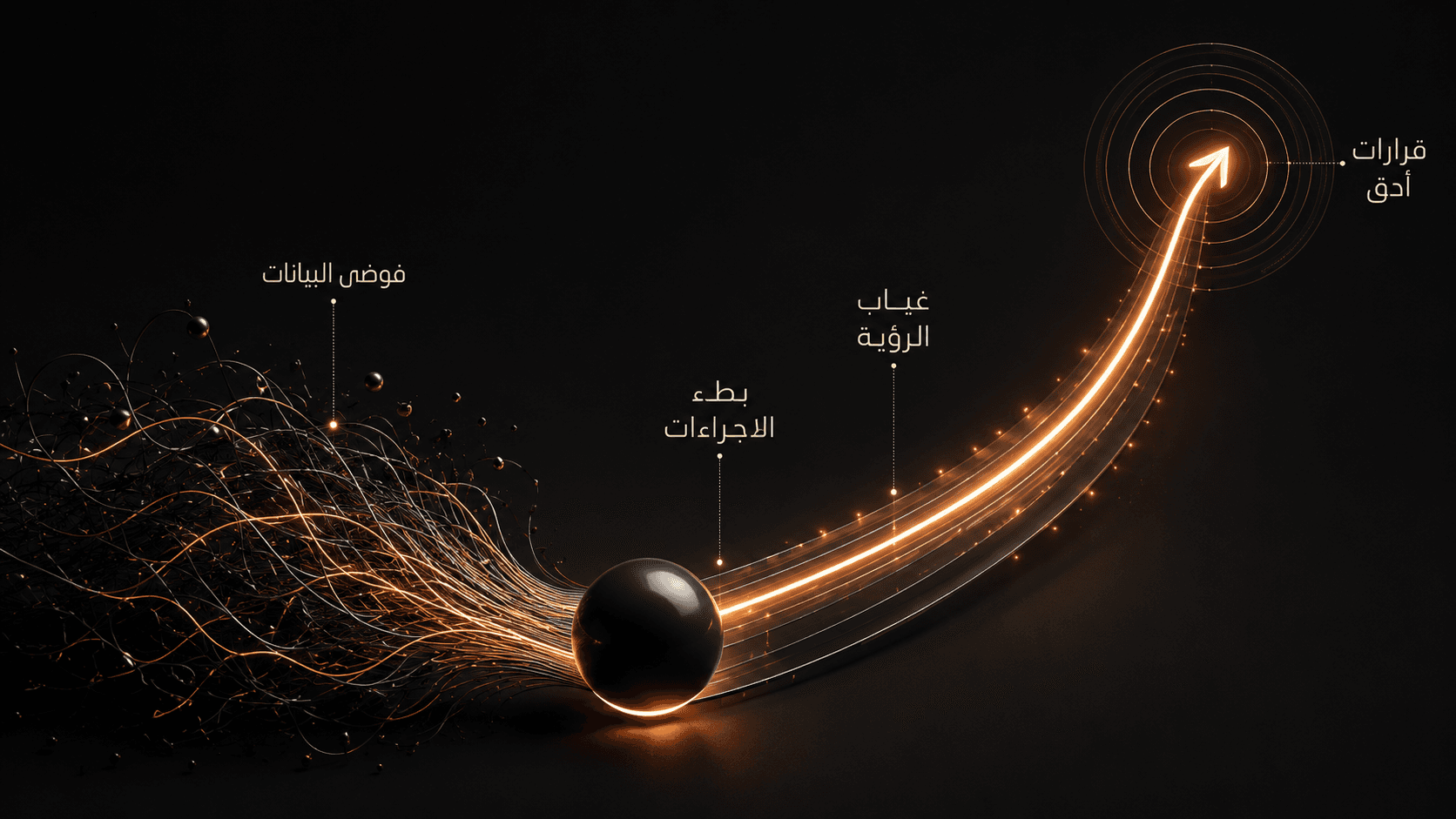
An organization may have systems, people, and data, yet management still operates with less clarity than it should.
The information exists, but getting the complete picture requires more than one system or file.
Employees re-enter information or move it between tools.
A report requires time and manual compilation before it is ready for a decision.
The team works outside the system because some processes do not fit it.
Part of the work continues because a specific person knows the details, not because the process itself is clear and documented.
Not every challenge needs a new system. The right step may be to improve what exists, connect it, recalibrate it, automate part of it, or build what is missing. We identify the problem before choosing the technology.
We begin with how the organization works, not with the system we want to implement.
We design systems around the processes, data, responsibilities, and decisions the organization actually needs.
It is not enough for a system to work today; it should give management clearer visibility and accommodate the way work evolves.
We do not treat launching a system as the end of the project. We review actual use, develop the system as business needs change, and use technical advances when they add real value—not simply because they are new.
We study how work and information move between people, departments, and systems.
We distinguish procedural issues from technical ones and identify what needs organizing, development, or integration.
Before implementation, we define the required workflows, permissions, data, integrations, and reports.
We launch the system in a controlled way, monitor actual use, and develop it as business needs change.
The outcome we seek is not simply a system that works, but an environment that helps people work with clarity and gives management a better ability to monitor and decide.

To understand operational reality, uncover bottlenecks, and organize workflows before making a technical decision.
Implementing and developing ERP systems to fit actual operations and the needs of each department.
Developing systems and applications when an off-the-shelf solution does not adequately meet the business need.
Connecting systems and data to reduce interruptions and duplication between departments and tools.
Turning recurring steps, approvals, and workflows into more organized and trackable operations.
Turning operational data into clearer visibility that helps management monitor and decide.
Supporting and developing existing systems as business needs change, whether Reflection built them or took them on after an assessment.
Some needs do not begin with a general service, but with an operational environment that has its own details.
It helps organize property, unit, contract, and follow-up data within a more connected operating environment.
It organizes workflows in agricultural marketing offices and reduces reliance on scattered paperwork through a digital environment tailored to the activity.
Every industry has its own way of operating. Some have denser processes, data movement, responsibilities, and reporting needs. That is why we start by understanding the organization before defining the solution.
Managing properties, units, contracts, collections, maintenance, and follow-up.
Fast field operations that connect suppliers, sales, collections, statements, and data.
Connected sales, purchasing, inventory, customers, suppliers, and branches.
Operations that need clearer links between production, inventory, purchasing, costs, and operational data.
Inventory, order, and procurement flows that need better visibility and follow-up.
Administrative and operational processes with varied data that need clearer organization and connections.
Multiple operational and administrative data sets that require organized data, procedures, and reporting.
If your organization operates in a different industry, that does not mean the solution is not a fit. We start by understanding the work, then determine whether Reflection can add real value.
Reflection helped move agricultural marketing operations from paper-based work to a centralized digital environment, with a custom application that supports the way work actually happens.
In Reflection's work with a real estate marketing organization, the journey began with a field visit, understanding operations, and mapping workflows before implementing the solution.
Every story begins with a different question. That is why we do not start with one solution for everyone.
We do not recommend a solution before understanding the reality.
We define what the project needs—and what it does not.
Technology is built around the need, not the other way around.
Support and development can continue based on the organization's needs and the agreed scope.


Not necessarily. The decision starts with understanding operations, current systems, and the actual need. The right path may be improving what exists, connecting several systems, or taking a different approach.
If data is distributed, procedures are repetitive, the current system does not keep up with work, or you face a challenge whose right solution is not yet clear—this is the starting point. Share the challenge, and we will begin by understanding it before recommending the next step.
Discuss Your Organization's NeedsStart with the challenge. We will start with the diagnosis.
We engineer clarity, and build efficiency.