How to Manage Supplier and Customer Data During Date Season
During the date season, the value of supplier and customer data lies not simply in recording it, but in being able to retrieve it and connect it to the right transactions when needed.
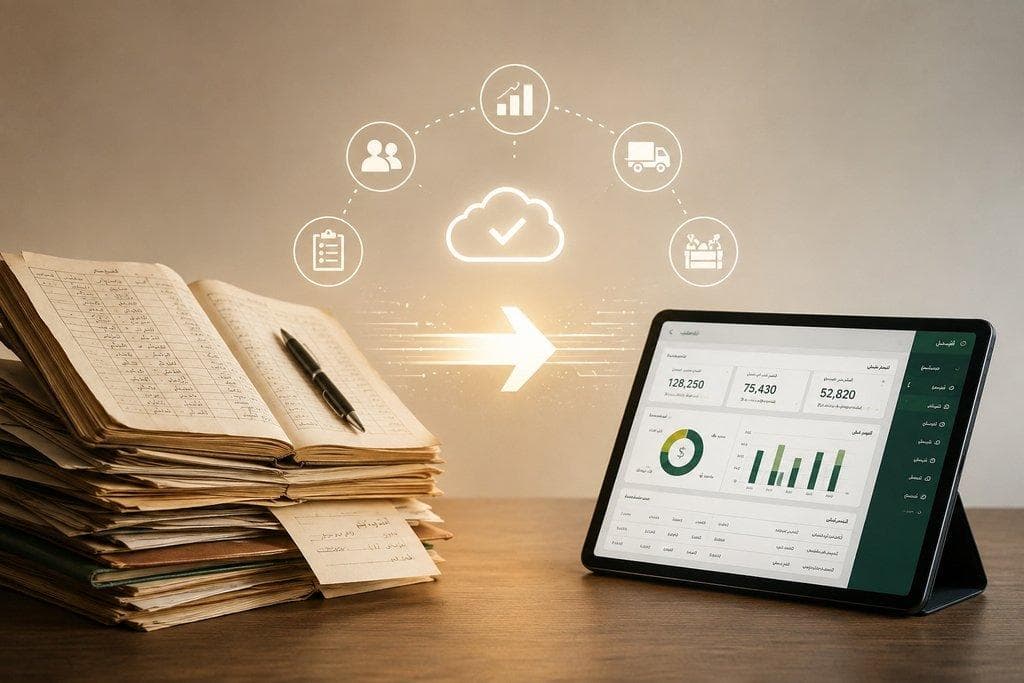
Every transaction in an agricultural marketing office creates information.
A supplier name. A customer. An invoice. A payment. A sales transaction. Or details that management and employees may need to retrieve later.
As seasonal activity increases, the volume of data grows quickly.
But data volume is not the main challenge.
The real question is **how that data is organized and connected to the work.**
Do Not Let Every Transaction Become an Isolated Story
If supplier details are stored in one record, their transactions in another, and additional information somewhere else, building a complete picture becomes increasingly difficult over time.
The relationship between parties and transactions should be clear.
When an employee looks up a supplier or customer, the relevant information should be traceable from a reliable source.
Distinguish Between Storing Data and Managing It
Having a customer’s name in a file does not mean the customer’s data is being managed.
Management means being able to access the information the office needs within the context of the transaction itself.
That is the difference between:
**An archive that stores information**
and
**A system that connects information to operations.**
Reduce Dependence on Memory
In some offices, experienced employees can recall a large amount of operational detail without checking a record.
That experience is valuable, but it should not become the only source of information.
When supplier and customer data becomes part of a structured system, knowledge moves from individual experience into a form the business can continue to rely on.
Make Updates Part of the Workflow
One reason data quality deteriorates is that updates are postponed or handled outside the main workflow.
The more closely information capture is tied to the transaction itself, the easier it becomes to maintain a clear and reliable record of what happened.
Design Data Around Management Needs
Office owners do not only need the details of individual transactions.
They also need a broader view that helps them understand how the business is operating.
That is why data should be structured from the beginning to support daily operations, reporting, and historical reference—not simply to fill in fields.
The Bottom Line
During the date season, transactions move quickly and data accumulates just as fast.
The value does not come from storing more of it.
It comes from organizing it so the right information is available to the right person when they need it.
That is the difference between an office that keeps records of its transactions and one that builds a **reliable source of operational information**.
Comments
No comments yet.